


Here are 4 good reasons to continue giving hay to horses, even when grass is available in the pastures:
1/ Grass Quality: If the grass is poor in nutrients or insufficient in quantity, hay can compensate for the horse’s nutritional needs.
2/ Dietary Transition: Abruptly switching from a hay-based diet to an exclusively grass diet can disrupt the horse’s digestive system. Proceed gradually!
3/ Health Issues: Some more sensitive horses can benefit from a hay supplement to avoid an overload of sugar or fructans present in fresh grass.
4/ Availability: When pastures become depleted, especially at the end of the season, hay can be essential for maintaining a balanced diet.
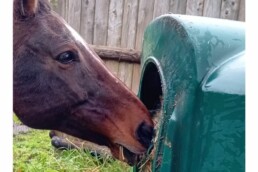
Hay is a beneficial precaution for the health and comfort of your horses.
Here are some precautions when turning your horse out to pasture:
- Give hay before pasturing, no concentrated feeds.
- Slowly increase the grazing duration and gradually extend it.
- If the horse suffers from diarrhea, do not further extend the grazing duration, but increase the amount of hay until the intestinal flora has normalized.
- Reduce the amount of concentrated feeds during the pasturing period.
- Ensure your horse gets enough exercise. The extra calories from the grass must be burned through exercise, and digestion must remain active.
- Try not to further overload the horse’s metabolism. If possible, avoid medicinal treatments and dewormers during this period.
Why should precautions be taken during spring pasturing?
In spring, the sun may already be shining, but the nights are cool, and the soil temperature is therefore also below 8°. Solar radiation certainly triggers photosynthesis, but the cold does not allow energy to be converted into growth. The fructan content is therefore very high. Fructans can cause a great deal of suffering for horses that are sugar-sensitive.
For healthy horses, a normal amount of fructan is not a problem. But for horses that are prone to intestinal or metabolic problems, an excessive amount can be dangerous. Fructan is not digested in the small intestine; it therefore flows into the large intestine where it is fermented by bacteria. This disrupts the microbial flora and leads to a reduction in the production of healthy nutrients such as volatile fatty acids, an increase in the release of harmful substances, and increased permeability of the intestinal wall. This allows toxins to enter the body, leading to acute immune reactions and metabolic problems. The clinical consequences of excess fructan are often colic, diarrhea, and laminitis.
The benefit of continuing to feed hay in spring:
Hay helps balance and reduce fructan absorption. The hay drying process reduces fructan content compared to fresh grass. Thus, by consuming hay, horses ingest food less rich in fructan. By adding hay to the diet, the proportion between fresh grass and a more neutral feed is balanced. The total amount of fructan absorbed is thus considerably reduced. Furthermore, hay is rich in fiber, which helps slow down digestion. This also helps limit sudden spikes in sugar assimilation, including fructans, and thus protects against problems related to potential overconsumption.
If you have specific cases or doubts, consulting a veterinarian or an equine nutritionist is always a good idea! 😊
Read our article on this topic here