


Greedy Horse: Why Does It Eat So Fast and How to Slow It Down?
Why My Horse Is a Greedy Eater: The Conflict Between Nature and Captivity
Does your horse devour its hay ration in record time, and is it always on the lookout for the next meal? This ‘greedy horse’ behavior is common, but it’s not simply a sign of gluttony. It often originates from a mismatch between the domestic lifestyle imposed on them and equine physiology. In their natural state, horses spend nearly 16 hours a day grazing, continuously ingesting small amounts.
Stable life, with divided meals (often two or three a day), creates food anxiety. The horse eats quickly out of fear of scarcity, boredom, or a simple competitive instinct, even if it’s alone.
Life with unlimited access to loose hay offers an abundance of forage. The hay is easily accessible. The horse can grab very large mouthfuls without effort or resistance.
This ingestion speed is a direct response to a feeding rhythm that is not natural for them.
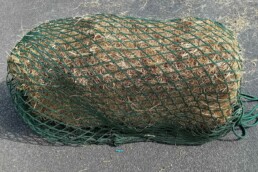
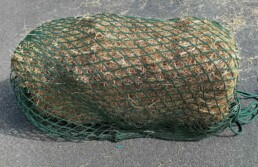
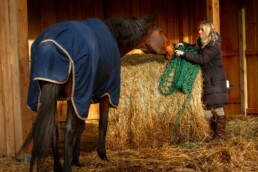
Here is an XL bundle hay net model. Allows for simple and quick handling for distributing hay in “small bale” format.
Health Consequences of Rapid Ingestion
This feeding behavior leads to serious health problems in horses.
First, the most immediate danger is “esophageal choke”: by swallowing large mouthfuls without sufficient chewing, the hay can get stuck.
But long-term consequences are more serious. A horse that eats too fast doesn’t chew enough and therefore produces less saliva. However, saliva is the only antacid the horse has to buffer the permanent acidity of its stomach. A meal swallowed in 30 minutes instead of 3 hours means an empty stomach for long periods, which promotes the development of gastric ulcers. Furthermore, this massive and rapid influx of food disrupts the entire digestive system, significantly increasing the risk of colic and promoting weight gain.
First Steps to Regulate Feeding Rhythm
Fortunately, there are solutions you can implement to help your horse regain a healthier and slower feeding rhythm. The first approach is to divide meals as much as possible to reduce fasting periods. However, this solution is complicated for horse owners to implement. You can also wet the hay, which forces the horse to sort more and slightly slows down intake.
However, the most effective solution is to mechanically influence the horse’s ability to grab its hay. This is the entire principle of “slow feeding” (or slow eating), to force the horse to take smaller mouthfuls at a time and thus eat more slowly, mimicking the horse’s natural behavior.
The Hay Net: The Best Slow Feeding Tool
The hay net stands out as the simplest, most economical, and most effective solution to combat the bulimic effect in horses. Specifically, a hay net that radically extends the hay ingestion time. The horse can no longer “grab” large tufts of forage; it must grasp the hay strand by strand. A meal that was previously devoured in 45 minutes can now be spread out over 3 or 4 hours. The benefits are twofold: not only is the ingestion time respected, but chewing is also increased. The horse therefore produces more saliva, protecting its stomach. Furthermore, this activity occupies its mind, combats boredom, and significantly reduces stress related to waiting for the meal.
Our tips for choosing the mesh size here https://filetafoin.com/ in the article “how to choose your mesh size”
Conclusion: Reconciling Digestive Health and Mental Well-being
In conclusion, a greedy horse is often just a horse whose lifestyle does not respect its fundamental physiology. Slowing down its ingestion speed is a true return to calm and digestive serenity. By using a suitable tool like the hay net, you are not just correcting a behavioral “flaw”; you are addressing a vital need. You offer your companion better digestive health, actively prevent the onset of serious pathologies like ulcers and colic, and improve its daily mental well-being.

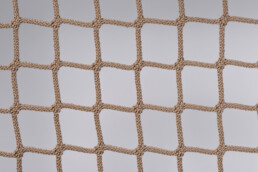
Polyester vs. Polypropylene
Which Hay Net for Your Horse?
Choosing a hay net shouldn’t solely depend on price; the material is crucial for your horse’s health and the durability of your equipment. There are two most common materials, polypropylene and polyester, and it’s essential to understand their differences to make the right choice. Other materials like nylon will not be discussed; they should be avoided!
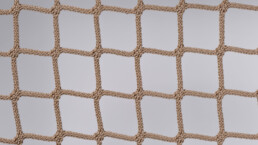
It’s a true contest of strength, safety, and longevity.
Polypropylene (PP): Lightweight, but with Limitations
Widely used, polypropylene has the advantage of being a very affordable and lightweight material. It’s the material most commonly found on the hay net market. However, its weaknesses are significant:
Polypropylene is sensitive to UV rays, which makes it fragile. Over time, and especially if exposed outdoors, it becomes brittle and rough. This degradation can lead to the formation of small, rigid, and sharp fibers, which can irritate your horse’s mouth and lips. This is not ideal for daily use. Anti-UV additives delay degradation, but do not completely prevent it. Over time and with prolonged exposure, the material can still become rough and lose its strength.
Polyester: The Choice for Durability and Comfort
Polyester, the material used for Feelnets hay nets, stands out for its strength, lightness, and softness. More resistant than polypropylene (PP), it can withstand a much higher tensile load. It’s the material used in the marine industry for its qualities. Much greater longevity for your net, even with intensive use. There is no risk of degradation in the sun, and it remains flexible and non-irritating for gums, teeth, and whiskers, even after years of use.
Polyester also has other advantages. It is non-absorbent, so it does not retain water and does not mold. This keeps the hay healthy. Furthermore, it is much softer to the touch and is unlikely to irritate your horse’s skin or mouth, even when it chews.
Polyester has superior UV resistance in its natural state, without needing as many additives as PP. This is a property inherent to its composition. That’s why it’s the material of choice for boat sails or high-end ropes, where reliability and longevity in extreme conditions are paramount.
Verdict: Polyester Wins Hands Down
For your horse’s comfort and your peace of mind, the choice is clear. Polypropylene may seem economical to purchase, but its limited lifespan and the risks of degradation make it a poor long-term investment. Opting for a Feelnets polyester hay net means choosing a product that will last for years, while ensuring your horse’s well-being.
Find our range of polyester nets here
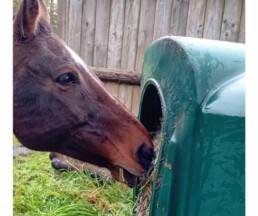
Spring, Pasturing, and Hay
Here are 4 good reasons to continue giving hay to horses, even when grass is available in the pastures:
1/ Grass Quality: If the grass is poor in nutrients or insufficient in quantity, hay can compensate for the horse’s nutritional needs.
2/ Dietary Transition: Abruptly switching from a hay-based diet to an exclusively grass diet can disrupt the horse’s digestive system. Proceed gradually!
3/ Health Issues: Some more sensitive horses can benefit from a hay supplement to avoid an overload of sugar or fructans present in fresh grass.
4/ Availability: When pastures become depleted, especially at the end of the season, hay can be essential for maintaining a balanced diet.
Hay is a beneficial precaution for the health and comfort of your horses.
Here are some precautions when turning your horse out to pasture:
- Give hay before pasturing, no concentrated feeds.
- Slowly increase the grazing duration and gradually extend it.
- If the horse suffers from diarrhea, do not further extend the grazing duration, but increase the amount of hay until the intestinal flora has normalized.
- Reduce the amount of concentrated feeds during the pasturing period.
- Ensure your horse gets enough exercise. The extra calories from the grass must be burned through exercise, and digestion must remain active.
- Try not to further overload the horse’s metabolism. If possible, avoid medicinal treatments and dewormers during this period.
Why should precautions be taken during spring pasturing?
In spring, the sun may already be shining, but the nights are cool, and the soil temperature is therefore also below 8°. Solar radiation certainly triggers photosynthesis, but the cold does not allow energy to be converted into growth. The fructan content is therefore very high. Fructans can cause a great deal of suffering for horses that are sugar-sensitive.
For healthy horses, a normal amount of fructan is not a problem. But for horses that are prone to intestinal or metabolic problems, an excessive amount can be dangerous. Fructan is not digested in the small intestine; it therefore flows into the large intestine where it is fermented by bacteria. This disrupts the microbial flora and leads to a reduction in the production of healthy nutrients such as volatile fatty acids, an increase in the release of harmful substances, and increased permeability of the intestinal wall. This allows toxins to enter the body, leading to acute immune reactions and metabolic problems. The clinical consequences of excess fructan are often colic, diarrhea, and laminitis.
The benefit of continuing to feed hay in spring:
Hay helps balance and reduce fructan absorption. The hay drying process reduces fructan content compared to fresh grass. Thus, by consuming hay, horses ingest food less rich in fructan. By adding hay to the diet, the proportion between fresh grass and a more neutral feed is balanced. The total amount of fructan absorbed is thus considerably reduced. Furthermore, hay is rich in fiber, which helps slow down digestion. This also helps limit sudden spikes in sugar assimilation, including fructans, and thus protects against problems related to potential overconsumption.
If you have specific cases or doubts, consulting a veterinarian or an equine nutritionist is always a good idea! 😊
Read our article on this topic here
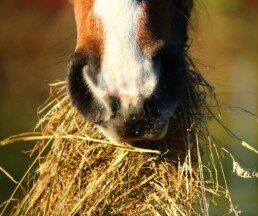
Horse Forage Feeding
Hay is a staple food for equids. It provides a high-quality fiber source in their diet. The text below explains everything you need to know about hay for equids:
Hay is cut and dried grass, usually composed of different varieties of grasses and legumes. It is harvested when the plants are at an optimal stage of maturity and is then dried to reduce its moisture content.
Why do equids need hay?
Equids need hay for several reasons. First, it provides a source of dietary fiber that is essential for healthy digestion. Fiber helps prevent digestive problems such as colic and contributes to the proper functioning of the digestive system. Additionally, hay can also help maintain an adequate body weight in horses and donkeys that tend to gain weight easily.
What type of hay is best for equids?
The type of hay recommended for equids depends on their individual needs. In general, good quality hay should be clean, free from excessive dust, and mold-free. It is best to choose hay that contains a good proportion of grasses and legumes to ensure a balanced nutrient intake.
How to feed hay to equids?
Hay can be fed to equids in various ways. It can be offered loose in an appropriate feeder that allows horses to pull out the strands of hay and eat them at will. It can also be offered in the form of hay nets, which helps ration hay consumption and prevent gluttony, waste, and dust inhalation.
View our range and prices here
Advantages of hay compared to grass:
– Storage: Hay can be stored for long periods without deteriorating, making it a reliable forage source throughout the year.
– Nutritional Value: Hay generally contains a higher fiber content than fresh grass, which can be beneficial for animals’ digestive systems. It can also provide a constant supply of essential nutrients throughout the year.
Disadvantages of hay compared to grass:
– Lower energy and protein values: Fresh grass generally has a higher energy and protein value than hay.
– Variable nutritional quality: The nutritional quality of hay can vary depending on various factors, such as harvest time, climatic conditions, etc. Therefore, it is important to ensure that the chosen hay has adequate nutritional value for the animals. In comparison, fresh grass generally available in nature is more consistent in terms of nutritional value.
– unlike grass, hay is a source of dust. There can be dust in hay for several reasons. First, during hay harvesting and drying, particles of soil, pollen, mold, and other allergens can mix with the hay. Additionally, if hay is stored in humid conditions, there can be an increase in mold and dust. When hay is stirred or handled, these particles are released into the air, which can cause respiratory problems (allergies, emphysema, etc.) in equids. It is therefore important to ensure that horses do not root their noses in the hay. The hay net is a solution that addresses this problem.
Read our article on this topic here
Hay Nets and Colic Prevention in Horses
Hay Nets and Colic Prevention in Horses
Colic, a true nightmare for horse owners, is a digestive disorder that can seriously affect the health of our equine friends. This abdominal pain can occur for various reasons, such as an unbalanced diet, rapid hay intake, or lack of exercise. This is where hay nets come into play, becoming valuable allies in the prevention of colic and other digestive disorders.
By slowing down hay consumption and promoting more natural feeding behavior, hay nets greatly contribute to the well-being of horses.
Slower and More Natural Hay Consumption
Hay nets are specifically designed to slow down the rate at which horses ingest their hay. Unlike traditional feeding where hay is simply placed on the ground or in a feeder, hay nets require horses to pull the hay through the small mesh of the net. This process more closely mimics how horses feed in the wild, by grazing for long periods. This slower, more regulated approach helps reduce the risks of overfeeding and rapid fermentation in the stomach, two key factors in the occurrence of colic.
Reducing Risky Behaviors
In addition to slowing down hay intake, hay nets also help reduce certain risky behaviors associated with digestive disorders. For example, when a horse has access to a large quantity of loose hay, it may tend to select the most palatable parts, leaving the less appetizing stalks aside. This selectivity can lead to an unbalanced diet. With a hay net, the horse is compelled to eat more uniformly, ensuring better digestion and more consistent nutrient absorption. Furthermore, by reducing unlimited access to hay, hay nets encourage increased physical activity, as horses spend more time “working” to obtain their food.
An Indispensable Tool for Digestive Health
Hay nets are therefore much more than a simple feed management accessory. They play a crucial role in colic prevention and contribute to better overall digestive health in horses. By combining the use of hay nets with other good feed management practices, such as access to clean, fresh water, quality pastures, and a regular exercise routine, owners can significantly improve the well-being of their horses. Thus, investing in quality hay nets, such as those offered by Feelnets, represents a wise and effective preventive measure for any stable concerned about the health of its equids.
Different Uses for Hay Nets in Stables
Feeding Management
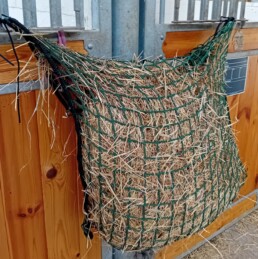
One of the primary uses of hay nets is for managing horse feeding. Fine-mesh nets encourage horses to eat more slowly, simulating natural, continuous grazing. This method reduces the risk of digestive issues like colic and gastric ulcers, while also keeping horses occupied for extended periods. By slowing down hay intake, hay nets also help prevent boredom and destructive behaviors.
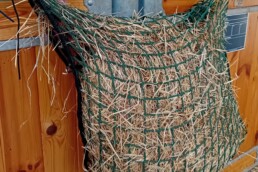
Hay nets have become essential accessories in modern stables. Their simple yet effective design meets various needs, from managing horse feeding to reducing hay waste.
Waste Reduction
Hay nets are also effective at reducing hay waste. In traditional stables, a significant amount of hay is often wasted as horses trample and scatter it. By using hay nets, the hay remains contained and clean, allowing for better utilization of every strand. Less waste translates to significant savings on hay costs, benefiting breeders and stable managers.
Preventing Feeding Conflicts
In stables where multiple horses are fed together, hay nets can help prevent feeding conflicts. By placing several nets in different locations, each horse has equal access to hay, thereby reducing aggressive or competitive behaviors. This method helps maintain a calmer and more harmonious stable environment, which is essential for the well-being of all horses.
Mental and Physical Stimulation
Hay nets also provide mental and physical stimulation for horses. The process of pulling hay through the mesh engages horses and encourages them to use their cognitive abilities. This stimulation is particularly beneficial for horses that spend long periods in stalls or paddocks, as it offers an enriching activity. Additionally, this activity can help strengthen neck muscles and improve horse posture.
Improved Dental Health
Using hay nets can also contribute to horses’ dental health. By eating more slowly and using their teeth to pull hay through the mesh, horses experience more natural wear on their teeth. This can help prevent common dental problems such as uneven tooth wear, which can lead to chewing complications and require veterinary care. By promoting a more natural feeding process, hay nets play a role in maintaining horses’ oral health.
In conclusion, hay nets are versatile and beneficial tools for stables. From feeding management and waste reduction to preventing feeding conflicts and providing mental and physical stimulation for horses, their uses are varied and valuable. Adopting hay nets in your stable can significantly improve your horses’ well-being and the efficiency of your management.
another article here
Frequently Asked Questions about Hay Net Usage
-
How to choose the mesh size?
It is important to choose an appropriate mesh size based on how you intend to use your net. You need to consider the size of the hay strands and your horse’s eating habits. Smaller mesh sizes (approximately 3 to 50 cm) slow down hay consumption, promoting slower and more consistent feeding, which is beneficial for digestion. Larger mesh sizes (over 6 cm) are suitable for horses that do not have issues with gorging and require a higher hay flow. You can find more information here.
-
How to introduce a horse to a hay net?
Some horses may be reluctant to use a hay net for the first time. It is helpful to accustom them by pulling hay through the net’s mesh so that the hay protrudes and is easy to grasp.
-
How to wash my net?
Regular cleaning is essential to prevent the accumulation of dust and debris. Use a soft brush and rinse with clear water.
-
How to repair a hole in your hay net?
You can repair your net yourself using a cord. We also offer a repair service; to request a quote, send the dimensions of the hole, ideally a photo, to commercial@feelnets.com
-
How to order a custom hay net?
If you have specific dimensions, it is possible to order a custom net to perfectly suit your needs. We do not have an e-commerce site; you can send your order here.
-
What are the benefits of hay nets?
Hay nets help reduce dust, encourage slower and more natural feeding, and can improve horses’ oral health.
-
What is the lifespan of a hay net?
With proper maintenance, a polyester hay net can last several years. Outdoors, polyester has a lifespan of 18 years.
-
Are hay nets suitable for all types of hay?
Yes, but it is important to choose a net with an appropriate mesh size. Feel free to ask us for advice.
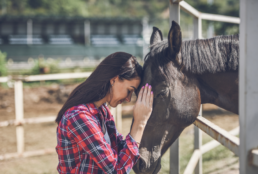
How and why hay nets prevent respiratory diseases in horses
Reduction of Dust Inhalation
Hay nets are an innovative solution for feeding horses, offering numerous health benefits, particularly in preventing respiratory diseases. The basic principle of hay nets is to slow down hay consumption, which not only improves digestion but also reduces the inhalation of dust and other airborne particles. Indeed, when horses eat slowly and methodically, they are less likely to stir up clouds of dust that could irritate their respiratory tracts. This is crucial because continuous exposure to dust and allergens is a major risk factor for conditions such as emphysema, a chronic lung disease that can severely affect a horse’s quality of life. Thus, with a hay net, horses can no longer bury their noses in the hay, thereby inhaling less dust and other allergens.
All hay net ranges and prices here
Prevention of Emphysema
Emphysema, also known as chronic obstructive pulmonary disease (COPD) in horses, is characterized by inflammation of the small airways and alveoli, leading to severe breathing difficulties. It is the equivalent of asthma in humans. This disease is often caused by repeated inhalation of dust, mold spores, and other irritants present in hay. Hay nets play an essential role in reducing these risks by keeping hay compacted and thus limiting the amount of dust released when horses feed. By eating at a slower pace, horses inhale fewer harmful particles, which reduces respiratory tract irritation and lowers the likelihood of developing chronic lung conditions.
Natural Grazing Posture
In addition to limiting dust inhalation, hay nets encourage a more natural and healthier grazing posture for horses. When hay is distributed on the ground, horses tend to eat quickly, which can exacerbate respiratory and digestive problems. Hay nets, on the other hand, allow horses to eat in a manner closer to their natural grazing behavior, with their heads down, which is beneficial for the drainage of the upper respiratory tract and for the prevention of respiratory diseases. This more ergonomic feeding method also helps reduce stress and improve the overall well-being of horses, as they spend more time feeding and satisfying their need to chew.
Improvement of the Feeding Environment
Finally, hay nets are also beneficial for the overall feeding environment of horses. By reducing the amount of hay scattered and airborne, they keep feeding areas cleaner and less dusty. Less dust in the immediate environment means better air quality for all horses present, which is particularly important in enclosed stables where ventilation may be limited. By investing in quality hay nets, stable owners and managers can contribute to a healthier and safer environment for their horses, thereby reducing the incidence of respiratory diseases and improving the overall health and well-being of their animals.
In summary, hay nets offer an effective and practical solution for preventing respiratory diseases, including emphysema, in horses. By slowing down hay consumption, reducing dust inhalation, encouraging natural grazing postures, and improving air quality in stables, these nets significantly contribute to the respiratory health of horses. For any horse owner concerned about their animal’s well-being, the use of hay nets represents a wise and long-term beneficial investment.
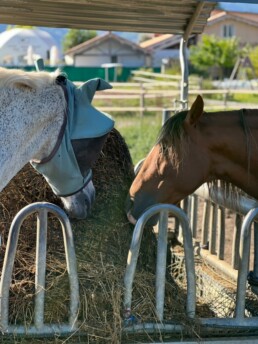
The benefits of Feelnets hay nets for horse health and well-being
Reducing Hay Waste
Hay nets are an innovative solution for optimizing hay management in stables. By preventing horses from pulling out large quantities of hay at once, these nets significantly reduce waste. Unlike traditional methods, where a substantial amount of hay is often trampled and soiled, hay nets keep hay clean and accessible in small portions. Horses will spread less hay on the ground. This hay saving not only leads to reduced costs for owners but also to more efficient feeding that respects equine physiology.
Feelnets offers a wide range of hay net sizes and shapes, to best adapt to each individual’s hay distribution methods.
Positive Impact on Digestion and Health
Using hay nets offers significant benefits for horses’ digestive health. By mimicking natural grazing, the nets encourage horses to eat slowly, promoting more thorough chewing and better salivation. This contributes to more efficient digestion and optimal nutrient absorption. Additionally, slowing down hay consumption helps prevent colic and other common digestive disorders in horses. By integrating hay nets into their feeding routine, horse owners can improve the overall health and well-being of their equines.
Weight Management and Obesity Prevention
Hay nets also play a crucial role in managing horses’ weight. By controlling access to hay and encouraging gradual consumption, these nets help prevent obesity, an increasingly common problem in domestic horses. Obesity can lead to a multitude of complications, including Equine Metabolic Syndrome (EMS) and laminitis. Hay nets significantly reduce the “greedy eater” effect. Horses will no longer be able to take large mouthfuls of hay. This preventive measure is essential to avoid long-term health problems and ensure an active and comfortable life for horses.
Preventing Respiratory Diseases
Another important advantage of hay nets is the reduction of dust exposure for horses. By keeping the hay compact and preventing it from scattering or horses burying their noses in it, hay nets reduce the amount of dust inhaled by horses. Less dust means less risk of developing respiratory diseases such as emphysema, a common condition in horses. By integrating Feelnets hay nets into their daily diet, owners can help preserve their horses’ lung health and provide them with a healthier environment.
Satisfied Owner Testimonials
Many horse owners who have adopted Feelnets hay nets report notable improvements in their animals. According to them, horses appear more relaxed and satisfied, exhibiting fewer behaviors related to feeding stress. Furthermore, owners have observed a reduction in hay purchase costs due to decreased waste. This positive feedback highlights the effectiveness of hay nets as a tool for feed management and equine well-being. For those looking to provide their horses with a healthy and economical diet, Feelnets hay nets are a proven and recommended solution.
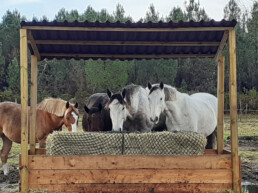
Slow Feeding
Do you know about slow feeding?
Slow feeding, or the practice of slow feeding equids, is becoming increasingly popular among horse and pony owners.
This method involves providing them with small quantities spread over a longer period, thus mimicking their natural grazing behavior. Slow feeding offers numerous health and well-being benefits for our equine companions. Firstly, slow feeding helps prevent digestive problems in equids. By offering them small amounts of hay, they are encouraged to chew longer, which promotes saliva production and aids in better food breakdown.

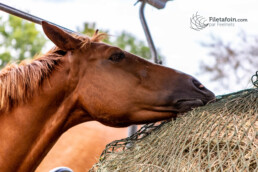
The hay net prevents the horse from taking large mouthfuls of hay. This way, it grabs the hay strand by strand and chews for much longer.
The Many Benefits of Slow Feeding
Slow feeding, achieved through the use of a hay net, reduces the risk of colic and other digestive disorders. Furthermore, slow feeding helps prevent excess weight in equids. By providing them with small quantities of feed at regular intervals, blood sugar spikes and cravings are avoided. This helps maintain their health and prevent the development of obesity, which can cause various issues in horses and ponies.
The practice of slow feeding, thanks to the hay net, also promotes mental engagement for equids. By allowing them to graze longer, they are encouraged to explore their environment and keep their minds occupied. This reduces the risk of boredom and undesirable behaviors such as cribbing.
Moreover, slow feeding allows for mimicking the natural diet of equids living in the wild. In their natural environment, horses and ponies spend a large part of their time grazing on small portions of grass throughout the day. By offering them a slow hay distribution system using a hay net, this ad libitum feeding is reproduced, and their natural needs are met.
Slow feeding therefore helps prevent boredom, overeating, digestive problems, and destructive behaviors in horses.
Here’s how to practice slow feeding for equids:
– Use hay nets: Hay nets significantly reduce the animal’s feeding speed. They can be attached in the paddock or in a shelter. We offer different mesh sizes, the choice of size allows you to control the feeding speed.
– Provide free-choice grass: If possible, allow horses to graze all day. Fresh grass is a natural food source and promotes grazing behavior.
The slow feeding technique allows for simulating their natural diet by reducing the speed at which they eat their hay.
To facilitate this method, many owners use a specially designed hay net. This net features appropriately sized mesh that limits access to food, thus forcing the animal to take its time eating.
In addition to extending meal duration, slow feeding with a hay net prevents hay waste and addresses issues of overweight and digestion in horses. It’s a simple and effective solution to ensure a balanced diet for our herbivorous companions.