


Slow Feeding in a Nutshell
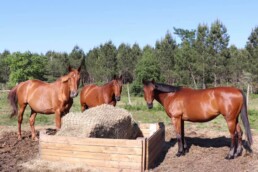
The practice of slow feeding, also known as controlled feeding, involves providing a constant amount of food to equids over a longer period. This method consists of setting up specific devices, such as hay nets, to slow down food consumption.
Why Use Slow Feeding to Feed Horses?
The benefits of slow feeding for equids are numerous. First, this practice allows for simulating the natural feeding behavior of these animals, which are predisposed to graze small quantities of grass throughout the day. By offering slow feeding, equids can return to a behavior that meets their physiological and behavioral needs.
Furthermore, the slow feeding promotes better digestion in equids. Horses are animals designed to spend most of their time eating low-energy vegetation. By mimicking this diet and limiting access to large quantities of calorie-rich foods, we can prevent digestive disorders such as obesity, colic, and gastric ulcers.
Finally, slow feeding can contribute to weight management in equids. Many horses and ponies are at risk of overweight and obesity, which can lead to health problems such as locomotor or metabolic disorders. By limiting food consumption and extending meal duration, animals can feel satiated longer and reduce the risk of excessive weight gain.
In conclusion, slow feeding, thanks to hay nets, offers numerous benefits for equids. By promoting controlled feeding and mimicking their natural behavior, horses and ponies can regain physiological and behavioral balance. In addition to promoting better digestion, slow feeding can contribute to weight management and the prevention of health problems.
How to Implement Slow Feeding?
Slow feeding, also known as controlled feeding, is a popular method used to feed equids, such as horses, ponies, and donkeys. This approach involves providing food in a more natural and slow manner, thus simulating their natural diet. There are several possible methods for practicing slow feeding, each with its advantages and disadvantages.
The most common method is the use of hay nets. These nets, also called slow feeding hay nets, limit access to food, thus forcing the animal to eat more slowly. The small mesh reduces the amount of food that can be taken at once, forcing the animal to pull the food through the mesh, which slows down the feeding process. This method also helps reduce hay waste and prevent health problems associated with overweight.https://filetafoin.com/comment-bien-installer-un-filet-a-foin-pour-chevaux/
Some equid owners prefer to use special feeders designed for slow feeding. These feeders have small holes that limit access to food, thus forcing the animal to eat more slowly. This allows for better digestion and prevents health problems such as gastric ulcers and colic.
Finally, some equid owners choose to divide the daily hay ration into several smaller meals, distributing them throughout the day. This method also allows the animal to feed more slowly, while mimicking its natural diet of frequent grazing.
In conclusion, slow feeding is a beneficial method for feeding equids. Slow feeding with hay nets allows equids to feed more slowly and enjoy better digestive health.