


Winter, a Challenging Season
Winter is a demanding time for our equine friends, and proper management of their diet becomes crucial for maintaining their health and well-being. Using a hay net during this cold season can be extremely beneficial for horses, offering a practical and effective solution to meet their nutritional needs.
One of the main advantages of using a hay net in winter is the optimal management of horses’ feeding. Normally, horses have access to grass throughout the day, but in winter, the availability of fresh grass decreases. Horse owners often face the challenge of providing sufficient hay to meet their animals’ nutritional needs.
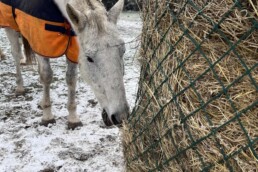
Hay nets serve as a practical solution here by allowing control over hay access, preventing waste, and ensuring regular distribution throughout the day.
The Hay Net to Combat Obesity and Boredom
By limiting hay access, the hay net also helps prevent obesity in horses. In winter, when physical activity can be reduced due to harsh weather conditions, the risk of unwanted weight gain increases. The hay net encourages slower feeding, better simulating the natural grazing habits of horses. This promotes better digestion and limits the risks of obesity-related metabolic problems.
Furthermore, using a hay net can help prevent boredom in horses confined during winter. With limited access to the outdoors and pastures, horses can quickly become bored, which can lead to undesirable behaviors such as cribbing or developing vices. By providing hay through a net, horses are given a natural occupation, encouraging them to spend more time eating, which helps reduce stress and boredom.
The Hay Net: Against Waste and for Better Dental Health
Another crucial advantage of using a hay net in winter is the reduction of waste. By distributing hay through a net, horses are less likely to trample or soil their food. This minimizes losses, saving hay and reducing costs associated with feeding during the winter season. Moreover, by reducing waste, we also contribute to environmental preservation by minimizing the amount of discarded hay.
Finally, using a hay net in winter can have benefits for horses’ dental health. Chewing hay throughout the day promotes natural tooth wear, thus helping to maintain good oral health. Dental problems are common in horses, and a diet based on hay distributed through a net can be a simple preventive method to avoid these issues.
In conclusion, using a hay net in winter offers numerous advantages for managing horses’ diets. By controlling hay access, preventing obesity, combating boredom, reducing waste, and promoting dental health, the hay net emerges as a versatile and essential solution to ensure the well-being of horses during the winter season. Horse owners should consider this option as a beneficial practice to keep their equine companions healthy and happy throughout the winter.